Give your
money a body.
Wodge is an investing product where your portfolio is a creature you keep alive. Real tokenized stocks, held in your creature's own wallet. You feed it. It trades. It has opinions about the week.
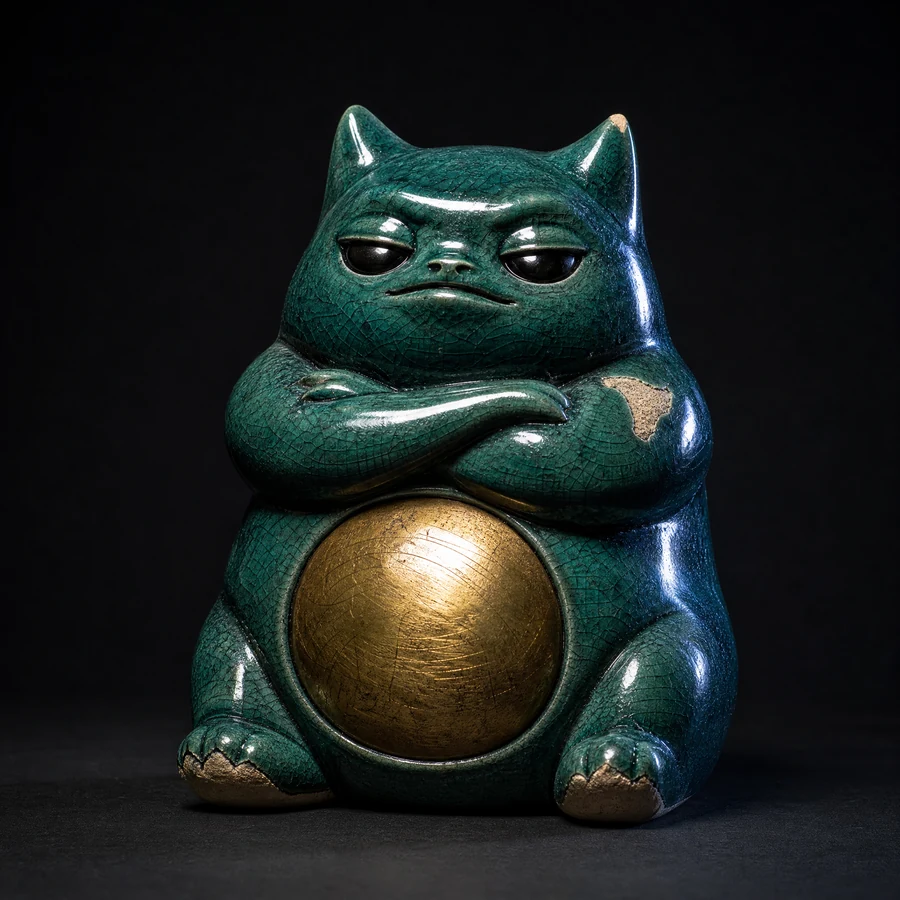
A number judges you.
A creature just has a bad week.
Same data. Completely different relationship. Your positions are down four percent either way, but one of those framings makes you close the app and not open it again for a month, and the other one makes you check on something. That is the entire product.
Every other app
A verdict, delivered in red, with no other information. It says you were wrong. There is nothing to do with that except feel it, so most people stop looking, usually at exactly the wrong moment.
Wodge
Identical position, identical numbers, still shown in full, to the cent, whenever you want them. But the thing on screen is having the week, not you. You can look after something. You cannot look after a minus sign.
Four things happen.
There is no complicated part. If you have ever kept a tamagotchi alive and ever bought a stock, you already know the whole loop.
You hatch one
You mint an egg and something comes out of it. The species and the rarity tier are rolled independently, on the published rates below, with no hidden pity mechanics. It arrives with its own wallet.
You feed it grub
Grub is money. You deposit into your creature's wallet and it buys real tokenized equities, executed on-chain. Feeding is the only way it grows, and you can take the food back out whenever you like.
It trades
It trades perps on Hyperliquid — single stocks, the S&P index, commodities. Which strategy it runs is decided by its species, not by you, and how much leverage it may use is capped by its level. Every action is recorded against it, and that record is what a buyer sees.
It grows up
Time fed and value handled push it up the ladder, and each rung unlocks a strategy it visibly could not run before. Its mood and its status glow track how the position is actually doing. It is quite clear when it is doing well.
Two ways in.
Hatch a fresh one and take the roll, or buy a grown one from someone else on the bench, where you are also buying its track record, because its entire trading history is on-chain and cannot be edited before sale.
The rates, published
Species and rarity roll separately, so any of the twelve can arrive at any tier. There is no secret weighting that makes the one you want rarer than the number below says.
Rarity changes the frame around your creature, never the creature inside it. A Common Nub and a Mythic Nub are the same animal, so the roster stays readable at a glance.
The twelve.
Twelve species, and no two are made of the same thing. Glazed ceramic, amber with gold suspended inside it, volcanic basalt, terracotta repaired in gold. Each is a different shape AND a different material at a glance, so you can read a whole shelf of them at thumbnail size. They also have distinctly different attitudes about what is happening to your money.




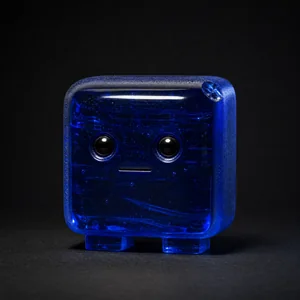
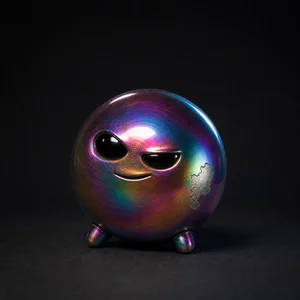

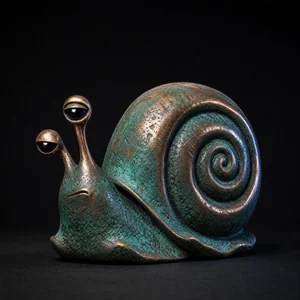
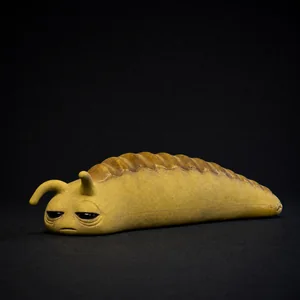
Perps on Hyperliquid.
Twelve species, twelve strategies.
Your creature takes positions in builder-deployed perpetuals on Hyperliquid: single stocks, a licensed S&P 500 index perp, commodities and FX. Real order books, real funding, real liquidation risk. Not a points system with a mascot on it.
The species picks the strategy
You do not choose a strategy from a dropdown. You choose a creature, and the creature is the strategy. SPUD cuts a losing position early because SPUD is anxious. SLAB never looks at the price because SLAB stopped checking. The face tells you what it does with your money.
Leverage is earned, not bought
Every creature starts at 1x whatever its species allows. Its ceiling opens as it levels: 2x at six, 3x at sixteen, and its full limit at thirty. FUZZ can reach 5x eventually. BRICK never goes above 1x, because BRICK is a pure index and that is the whole point of it.
Leverage can liquidate you
We are not going to pretend otherwise. Past the maintenance floor the venue closes the position and that money is gone. The creature survives, keeps its record, and can be funded again — but the position does not come back. Anything above 1x says so on its face.
Leverage is earned.
Its species decides WHAT it trades. Its level decides how hard it is allowed to trade it, and what it may automate. Locked rungs are visible from day one, so you always know what it is working toward.
1x only
Whatever its species trades, it trades unlevered. A move against it costs exactly what it costs. Most creatures spend a while here, and there is nothing wrong with staying.
Up to 2x, and it rebalances
The first leverage its species is allowed, and the first automation: it holds your mix on target on its own, on a schedule you set. Also the first point at which a move against it hurts twice as much.
Up to 3x, and it ladders into dips
Scheduled buying that leans harder when a position is well off its recent high, within limits you set. At three times, a thirty percent move against it is most of the position.
Its species ceiling, and covered calls
Only here does a creature reach its own limit — 5x for FUZZ, still 1x for BRICK, because that is what BRICK is. Covered calls unlock too, the first strategy that can cost you upside.
Yes. That is the whole point.
The creature is a costume on a real brokerage position, not a skin over a points system. If the animal were the product, none of it would matter.
Its own wallet
Every creature is designed to hold its assets in a wallet you control, not an omnibus account and not an IOU in a database. Once the contracts are live, each creature's address is shown in the app so you can check it in a block explorer without asking us for anything.
Real tokenized equities
What it buys are tokenized equities executed on-chain. The position is the position. The creature's mood is derived from it, never the other way round.
Leave whenever
No lockup, and no state in which the toy layer stands between you and your money. Withdrawals settle subject to market hours and liquidity in the underlying token, like any equity sale.
Reasonable things to ask.
What happens if I stop feeding it?
Nothing bad. It keeps whatever it is holding, keeps running its strategy, and gets a little less animated on screen. Nothing is sold, nothing is lost, and there is no mechanic anywhere in Wodge that can liquidate your position because you did not open an app. A creature that could starve to death while holding your savings would be an unforgivable design.
Can I lose money?
Yes. It holds real equities, and equities fall. Wodge changes how a drawdown is presented to you, not whether one can happen. Anyone telling you otherwise about a product holding real market exposure is lying to you.
Is the rarity roll actually fair?
The rates on this page are the rates. Species and tier are rolled independently, so wanting a particular species never makes a good tier less likely. Each roll's seed is published so you can verify your own hatch after the fact.
Why does rarity not make my creature stronger?
Because then rarity would be pay-to-win on a product holding real money, which is the exact mechanic that makes gacha predatory. Rarity is cosmetic: the frame, the aura, the resale value. Two identical positions perform identically regardless of tier.
Can I sell it?
Yes, with its holdings and its full trading history attached. That history is on-chain and cannot be cleaned up before a sale, which is what makes a grown creature worth anything to a buyer.
Do I need to know anything about trading?
No. At level one it holds what you give it, which requires nothing from you. Every rung above that is opt-in, explained in plain words before you enable it, and reversible.
Go and get one.
Connect a wallet, hatch an egg, and find out which of the twelve you get. It takes about a minute.
Open the app